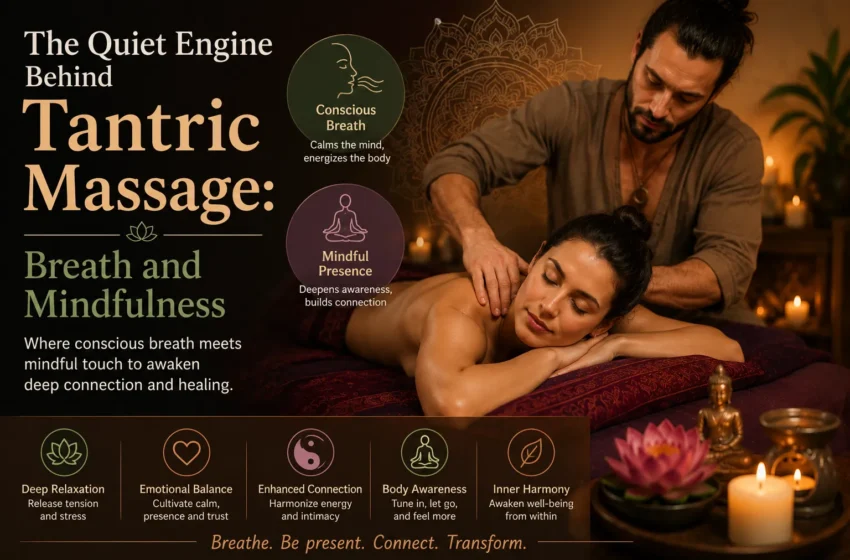
The Quiet Engine Behind Tantric Massage: Breath and Mindfulness

The Body Often Tells the Truth Before the Mind Does
Most people walk into a massage thinking about their muscles — a stiff neck, tired legs, a back that’s been tight for weeks. But often, the first real sign of how stressed someone is isn’t muscular at all. It’s their breathing.
Under stress, breath becomes shallow and quick almost without anyone noticing. The body braces. Attention scatters. By the time someone lies down for a massage, they’ve usually been breathing this way for hours — sometimes for years.
This is exactly where breathwork and mindfulness come in, and why they sit at the center of a genuine tantric massage experience rather than being a decorative add-on.
Breathwork, Without the Jargon
At its core, breathwork just means bringing awareness to how you’re breathing. In a tantric session, this isn’t intense or performative — it’s gentle. A therapist might invite slower inhales, longer exhales, or simply a few moments of quiet attention to the breath before anything else begins.
The effect, even when subtle, tends to be noticeable. As breathing slows, muscles often soften on their own. The mind quiets slightly. Sensations that were previously background noise become easier to notice. The session shifts from something that’s “done to you” into something you’re actually part of.
This is one reason tantric massage is often described as feeling deeper than ordinary bodywork — the breath changes the entire texture of the experience.
Mindfulness: Paying Attention Without Rushing Past It
Mindfulness is simply the practice of staying with what’s happening right now, instead of mentally rushing ahead or replaying the past. During a session, this might look like:
- noticing the rhythm of your own breathing
- becoming aware of physical sensations as they arise
- letting the mind settle without judging the experience
- gently returning attention when thoughts drift
This changes the quality of the massage itself. Instead of lying there while your mind runs through tomorrow’s to-do list, mindfulness pulls you into the moment — turning a passive experience into something closer to a shared, quiet meeting point between body, breath, and attention.
Why Slower Breathing Helps the Body Let Go
The nervous system listens closely to breathing patterns. Shallow breath tends to keep the body in a state of low-level alertness. As exhalation slows and deepens, the body often receives a kind of internal signal: it’s safe to relax now.
This matters enormously for people living fast-paced lives — not just physically tired, but mentally overstimulated by screens, deadlines, and constant low-grade pressure. A calm breathing rhythm acts as a bridge between the noise of daily life and the stillness of the session, which is often the first real step toward deep relaxation.
How Breath and Touch Work Together
Breath and touch are deeply linked. When breathing is tense, even gentle touch can feel sudden or hard to receive. As breathing slows, the body tends to become more open to touch — less guarded, more receptive.
Importantly, none of this should feel like a test. A skilled therapist never frames breathing as something to “get right.” Instead, the breath becomes something to return to — a steady anchor whenever the mind starts to wander.
Why Mindfulness Makes the Experience Feel Deeper
It’s surprisingly common for someone to be in a beautiful, relaxing setting and still feel mentally tense — physically present but mentally somewhere else entirely.
Mindfulness closes that gap. It gently redirects attention to:
- the breath
- the body
- the rhythm of the session
- the simple sensation of slowing down
This is often what separates a tantric massage from a standard treatment — not the techniques used, but the degree to which the person experiencing it is actually there for it.
Breath as Emotional Grounding
Many people carry feelings they haven’t had time to process — low-grade stress, sadness, frustration, or quiet exhaustion that’s been pushed aside. During deep relaxation, these feelings can sometimes surface or soften.
A steady breathing rhythm helps provide a sense of safety if that happens. This is part of why the pacing in professional tantric massage tends to be slower and more sensory than typical massage — the breath offers continuity and grounding throughout.
A good therapist won’t rush this process or try to force any kind of emotional release. They simply create space, stay attentive, and let things unfold at their own pace.
What a Breath-Focused Session Might Look Like
While every therapist works differently, sessions built around breath and mindfulness commonly include:
- a short conversation beforehand to set expectations
- gentle breathing guidance
- a slow transition into relaxation
- mindful, unhurried bodywork
- occasional reminders to return to the breath
- pauses for grounding
- a gradual close, with time to settle afterward
This structure helps the whole experience feel intentional rather than mechanical — which is part of what people are looking for when searching for a genuinely professional studio.
Breathwork Should Never Feel Forced
If breathing guidance ever feels too intense, too fast, or emotionally overwhelming, a person should always feel free to pause or simply breathe normally. Ethical practitioners build in this flexibility as a matter of course.
The goal was never to push anyone into a dramatic experience — it’s to create calm. Everyone’s nervous system responds differently: some people relax almost immediately, others need more time, some prefer silence, and others find gentle verbal guidance reassuring. The best sessions adapt to the person, not the other way around.
Mindfulness as the Foundation of Trust
Trust underpins everything in this kind of bodywork, and mindfulness supports it directly. By slowing things down, mindfulness gives space for a person to notice what feels comfortable — and to communicate if something doesn’t.
This is where the difference between a merely competent therapist and a genuinely skilled one becomes visible: paying attention not just to technique, but to breathing, body language, and overall comfort throughout the session.
A Counterpoint to Modern Pace
Cities run on speed — people moving between meetings, commutes, screens, and obligations almost constantly. Even rest can start to feel like another task to schedule.
This is exactly why practices built around breath and stillness have become so valued. The appeal of a tantric massage isn’t performance or stimulation — it’s the rare offer of uninterrupted presence. No agenda. No multitasking. Just a quiet space where the body can soften and the mind can slowly come back to itself.
Final Thoughts
Breathwork and mindfulness aren’t extras layered on top of tantric massage — they’re what gives it depth. Breath calms the nervous system. Mindfulness brings attention into the present. Together, they turn what could be simple bodywork into something far more restorative.
It isn’t only about touch. It’s about slowing down enough to actually feel present again — something that, for many people, has become genuinely rare.
FAQ
How does breathwork connect to tantric massage?
It helps calm the nervous system, slow mental activity, and support deeper relaxation throughout the session.
Why does mindfulness matter here?
It helps the person stay present, notice sensations, and experience the session more fully rather than mentally checking out.
Is breathwork mandatory?
No — in professional sessions it should always be gentle, optional, and never forced.
Can this help with stress?
Many people report feeling calmer and less stressed afterward, particularly in a professional, mindfulness-oriented setting.
What should I expect overall?
Calm pacing, clear communication, respectful boundaries, breath awareness, and a genuinely full-body relaxation experience.